


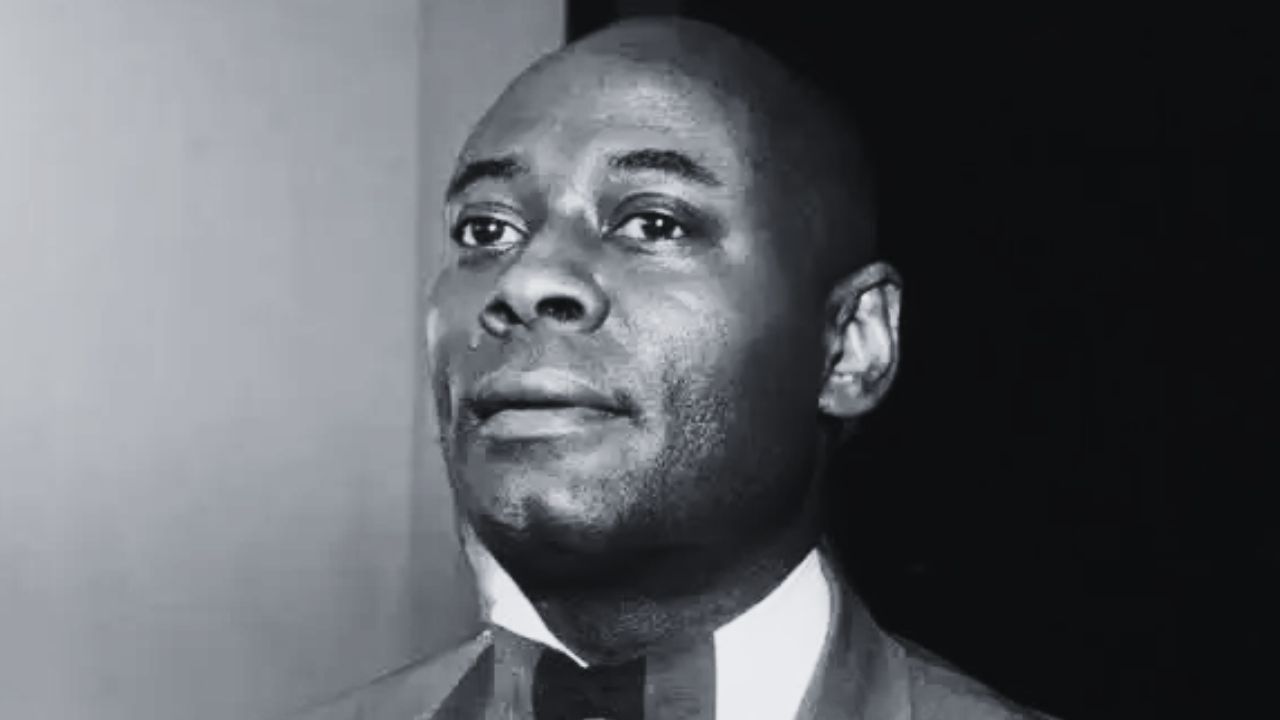
Are you ready to dive into the life of a man whose name surged across headlines and turned heads at every mention? Khalid Muhammad, a powerhouse in the 20th-century civil rights movement, left an unforgettable mark in the world of social activism. From his roots in the deep south to becoming a central figure in Black Nationalism, his journey sparks intrigue and debate. Let’s look closer!
Early Life and Education
Picture the bustling streets of Houston, Texas, in the late ’40s, where a young Harold Moore Jr. started his incredible journey. Better known to the world as Khalid Muhammad, this vibrant community laid the groundwork for the firebrand activist’s early years. Houston, a kaleidoscope of cultures and history, reflected the energy that Khalid would later channel into his passionate advocacy.
Now, take a trip down memory lane to Bruce Elementary, a place that marked the beginning of Khalid’s formal education. You can just imagine the excited chatter of kids in the hallways as they clutched their books, Khalid among them. From there, he moved on to E.O. Smith Junior High, and finally, Phyllis Wheatley High School. Here’s where the seeds of leadership and charisma began to sprout, hinting at a future that would be anything but ordinary.
Heading into higher education, Khalid chose Dillard University for his theological studies. That decision turned out to be pivotal. While at Dillard, he met teachings that would shape his life and lead him into the sphere of the Nation of Islam. And the finale to his academic journey? A degree from Pepperdine University. This was no small feat, particularly at a time when racial equality was still a distant dream for many African Americans. His achievements in education laid a firm foundation that supported his later work.
Introduction to the Nation of Islam
While at Dillard University in 1970, Khalid encountered ideas that would forever change the trajectory of his life. It was here that he first engaged with the Nation of Islam under the guidance of Elijah Muhammad. The teachings resonated deeply with him, and he soon found himself climbing the ranks within the organization. By 1983, he had taken the name Khalid, given to him by Louis Farrakhan, a move symbolizing his commitment to the cause.
Now, imagine being handed a microphone at a rally and speaking your truth to thousands. That was Khalid’s reality. In 1984, he was appointed the national spokesman, responsible for amplifying the messages of the Nation of Islam to wider audiences across mosques in New York and Atlanta. His voice was authoritative and enchanting, capturing the attention of supporters and critics alike. Khalid was on a mission, and he was just getting started.
Controversial Speech and Its Aftermath
Here’s the thing about making a big splash: sometimes the waves hit hard. In 1993, Khalid Muhammad delivered a fiery speech at Kean College in New Jersey. The words he chose that day set off a storm. His critiques and bold statements about various racial and religious groups didn’t just ripple—they crashed through the political landscape, triggering backlash from the U.S. Senate and House of Representatives.
The Nation of Islam’s own leader, Louis Farrakhan, distanced himself from Khalid’s pronouncements by removing him as the national spokesman. But wait, there’s more. In May 1994, while at the University of California, Riverside, Khalid survived an assassination attempt. It’s a testament to how powerfully divisive his words had become.
What do you think you’d do if faced with such an explosive reaction? For Khalid, it was about pushing forward, fearless and resolute in his beliefs. His voice, controversial or not, refused to be silenced.
Role with the New Black Panther Party
After parting ways with the Nation of Islam, Khalid Muhammad found a new stage—the New Black Panther Party. Stepping into a leadership role, he continued to wield influence with bold charisma. Let’s say you were there when Khalid organized the Million Youth March in New York City in 1998. Imagine the electricity in the air as tens of thousands gathered, despite fierce opposition from Mayor Rudy Giuliani. Intense, right?
But what exactly was the man fighting for? Khalid was a staunch advocate for Black independence and same-race marriage, emphasizing self-reliance and cultural pride. His approach wasn’t for the faint-hearted. It was militant, raw, and unyielding. He stood firm in the belief that true liberation required assertive and sometimes controversial action.
As chairman of the New Black Panther Party, Khalid Muhammad remained a voice that could not be ignored, proving his knack for galvanizing and energizing the people around him. This wasn’t just activism; it was a movement alive with vigor and urgency.
Final Years and Legacy
Life can sometimes be unpredictable, and 2001 marked the end of Khalid Muhammad’s life at 53 due to a brain aneurysm. An abrupt goodbye for a man who seemed to thrive on controversy and action. But what happened next? He was laid to rest at Ferncliff Cemetery, near the resting place of another revolutionary figure—Malcolm X. The location of his burial seemed almost symbolic, a nod to the legacy of leadership and influence Khalid shared with the legendary civil rights leader.
Khalid’s impact on the Black Nationalist movement forged pathways that have inspired new generations of activists. His audacity and willingness to confront authority pushed boundaries and ignited discussions that continue today. Though his methods and words were often contentious, his commitment to advocacy for racial justice remains a significant chapter in the story of America’s civil rights struggles.
Think about this: how does one measure the full impact of a life marked by such fervent conviction? For Khalid Muhammad, it’s through the waves of change his revolutionary spirit set in motion. History remembers those who dare to challenge, and Khalid indisputably belongs to that circle of brave souls.
Still keen to learn more about other impactful personalities and movements? Head over to this awesome resource filled with engaging reads. There’s a whole world out there, calling you to explore its hidden corners and stories waiting to be uncovered!
So, as you reflect on Khalid Muhammad’s extraordinary life, perhaps it’s worth asking yourself what stand you’re willing to take in the name of justice and equality. After all, history is but a series of choices made by fearless individuals, just like him, who stepped boldly into the light.
Also Read:
